
How to Read Dietary Supplement and Vitamin Labels and Ingredients?
Article author: Lenka Škachová, Scientific product specialist, WeCare
Date: October 20, 2026
On the front of the packaging, you see the product name and a promise that probably caught your attention. But what you are actually buying is determined by the information on the label, specifically which substances the product contains, in what form and how much of each you get in the recommended daily dose. That is where meaningful comparisons begin.
Dietary supplements can help complement your diet according to your needs. However, your current needs matter when choosing - you will ask different questions about a vitamin, a mineral or a complex blend designed for hair or joints. The label provides important information that can help you better assess whether a particular product matches what you are looking for.
What basic information must a dietary supplement label contain, and why?
Start with the product name and the designation “dietary supplement”. Then read the list of ingredients. You will find not only vitamins, minerals, plant extracts or other active ingredients, but also substances needed to manufacture the capsule, tablet or other form.
When comparing products, the information about the recommended daily dose and the amounts of individual active ingredients in that dose is essential. One capsule does not necessarily represent the entire daily dose.
For vitamins and minerals, also check the percentage of the Nutrient Reference Value (NRV). This figure indicates how much of the recommended daily intake of a particular vitamin or mineral the product contains in one daily dose. The NRV is a legally established value that allows you to compare the amounts of vitamins and minerals in different products. An overview of these values can be found in Annex XIII of Regulation (EU) No 1169/2011 of the European Parliament and of the Council.
Example: The Nutrient Reference Value for vitamin C for adults is 80 mg. If a dietary supplement contains 80 mg of vitamin C in its daily dose, this corresponds to 100% NRV. At 160 mg, it corresponds to 200% NRV.
The dietary supplement label also includes recommended dosage instructions and mandatory warnings, such as not exceeding the recommended daily dose, that dietary supplements are not a substitute for a varied diet, and that they should be kept out of reach of young children. This information is not just fine print. Dietary supplement labeling is regulated so that consumers know what they are taking and how to use it.
As with other packaged foods, also pay attention to allergens, the net quantity of the product, the best-before date, storage conditions and information about the operator responsible for the product.

Active ingredients in dietary supplements: Why do form and quantity matter?
An active ingredient is, in the common terminology of dietary supplements, the ingredient for which you usually buy the product. The name of the substance is the first piece of information, and its specific form is the second. For example, the packaging may state vitamin C, while the ingredient list reveals that its source is ascorbic acid or another permitted form of vitamin C. Similarly, there are different forms of all other vitamins and minerals.
For example:
- Vitamin D3: cholecalciferol.
- Vitamin E: for example, alpha-tocopherol or alpha-tocopheryl acetate.
- Vitamin B6: pyridoxine hydrochloride or pyridoxal-5'-phosphate.
So if you see a familiar vitamin name on the packaging and a more technical name in the ingredients, the manufacturer is usually specifying the form in which that nutrient is present in the product.
Form is related to bioavailability: Simply put, how a substance is released from a particular source and becomes available for the body to use. However, this is not a ranking in which one form always comes out on top. The amount, the composition of the entire product, how it is taken and individual needs also matter.
Imagine two products labeled “vitamin C”. One states the amount in a single tablet, while the other gives the amount in a daily dose consisting of two capsules. Before comparing the numbers, always make sure you are comparing the amount in the entire recommended daily dose.
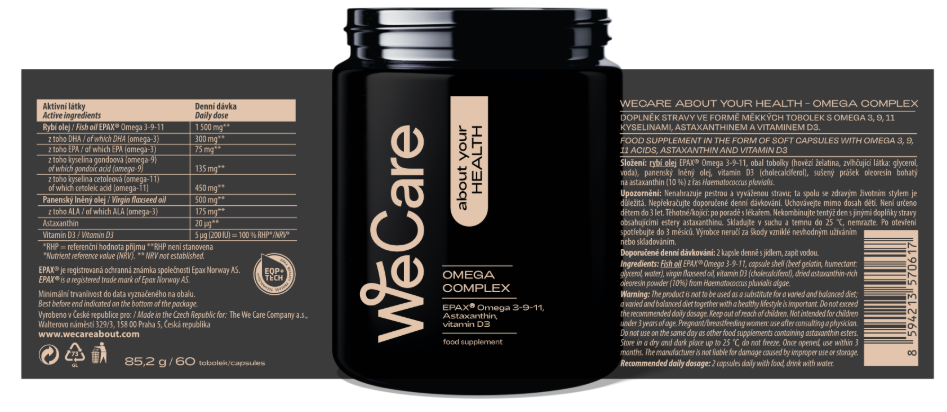
Follow the same approach for all other vitamins, whether you take them individually or as part of a multivitamin. If you combine several dietary supplements, also check whether any nutrients are unnecessarily duplicated and what their total daily amount is.
For minerals, it is important to distinguish between the amount of the compound used and the amount of the actual element that the product provides.
For example, if you are choosing a dietary supplement containing iron or zinc, focus primarily on the amount of elemental iron or zinc in the recommended daily dose, rather than just the weight of the ingredient from which the mineral comes. The term elemental amount should be stated directly on the label.
For iron, it is also advisable to tailor supplementation to your specific needs. If you suspect a deficiency, especially if you experience persistent fatigue or other symptoms, it is advisable to discuss the cause with a doctor and, if appropriate, use laboratory test results as a basis.
You should also be cautious about excessive intake of fat-soluble vitamins, namely vitamin A, vitamin D, vitamin E and vitamin K, as well as zinc and sodium. Long-term high intakes may pose health risks.
Excipients in dietary supplements: Why are they included in the formula?
When reading the ingredient list, you may come across fillers, binders or anti-caking agents. A filler helps create the volume and properties of a mixture that make it easier to process during manufacturing. A binder holds the tablet together, while an anti-caking agent makes it easier to process powdered mixtures. Other excipients may form the capsule shell or affect the taste of the product.
Their presence, even near the top of the ingredient list, does not in itself indicate low quality. These are supporting ingredients without which dietary supplements could not be manufactured and taken. What matters much more is whether the formula suits you and how much of the active ingredients you get for your money.
Example: Vitamin D3 is used in very small amounts, often measured in micrograms. To distribute such a small amount evenly across tablets or capsules, additional ingredients such as carriers or fillers are used. These may make up a larger proportion of the product's weight without this alone indicating anything about its quality.
How to compare similar dietary supplements based on their ingredients?
When you have two packages in front of you, a simple process can help:
1. Check whether the products contain the same active ingredient.
If you are comparing two vitamin C products, make sure they both actually contain it. For multi-ingredient products, also focus on the other substances, as formulas can differ significantly between brands.
2. Look at the specific form of the substance.
Find out which form of the vitamin or mineral is present in the product. Two different forms may have different properties, absorption rates or tolerability. However, the form alone does not determine the overall quality of the product.
3. Calculate the amount per recommended daily dose.
The most important thing is to compare equivalent figures. One product may state the amount of a vitamin in one capsule, while another gives the amount in a daily dose consisting of two tablets.
4. If the packaging states the amount per capsule, multiply it by the number of capsules recommended per day. If the manufacturer already states the amount for the entire daily dose, do not calculate it again.
5. Review the other ingredients and warnings.
Check the excipients, allergens and any additional vitamins or minerals. If you already take dietary supplements, check whether their ingredients overlap.
6. Calculate the cost per day of use.
The price of the entire package is not necessarily the best indicator of value. What matters is how many days the product lasts at the recommended dosage.
A cheaper package may therefore not be cheaper when used regularly. At the same time, a higher price does not automatically confirm a better choice. What matters is whether the product provides what you are looking for in a clearly stated dose.
Vitamins for hair or joints: What should you focus on when choosing?
For products labeled as vitamins for hair, focus primarily on the ingredients and amounts of individual active substances. In addition to vitamins and minerals such as biotin, zinc or selenium, products may also contain amino acids, plant extracts or other specific ingredients. Not only their presence matters, but also their form, amount in the recommended daily dose and how they are combined. If you are interested in how to care for your hair, read more in our article.
A quality dietary supplement for hair should have a transparent ingredient list and a thoughtfully designed combination of substances suited to its intended purpose. However, remember that hair health is also influenced by the body's overall nutritional status, hormonal changes, genetic predispositions and long-term stress. If you experience significant or persistent hair loss, it is therefore advisable to investigate the underlying cause.

You will find a similarly wide range of results when searching for dietary supplements for joints. These may contain collagen, glucosamine, chondroitin, MSM or plant extracts, for example. Individual products can differ significantly not only in their active ingredients, but also in their forms, dosages and the quality of the ingredients used. If you would like to learn more, read our article on how to care for your joints.
Compare which specific ingredients the product contains, in what form and in what amounts. Two products intended for the same purpose may have different formulas and recommended dosages.
If you have persistent joint pain, a dietary supplement for joints alone is no substitute for identifying the cause.